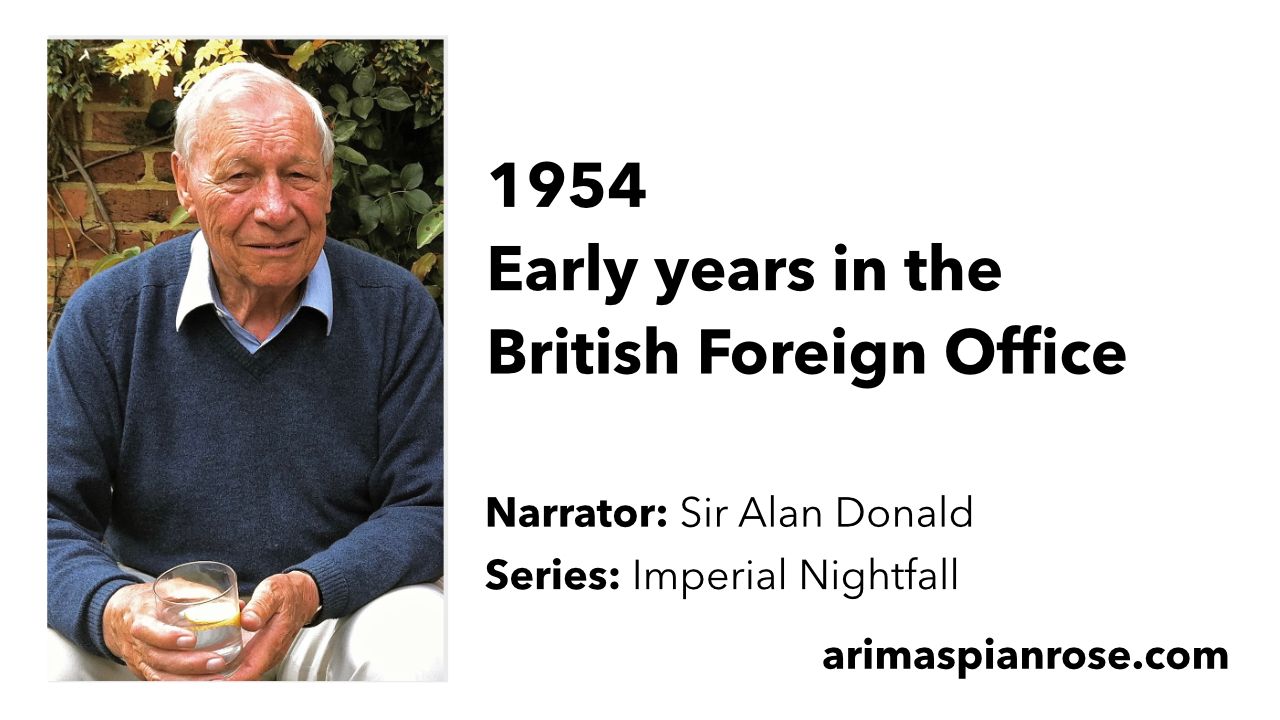
Sir Alan Donald remembers his first trip to China by boat in 1955. It was a journey that took 5 weeks stopping at every British coaling party on the way – Port Said, Calcutta, Penang, Hong Kong. He was astonished to find that life in Shanghai at that time in the 50s – even after the Communist revolution – had not changed since the 1930s.
Sir Alan Donald remembers applying to get a job with the British Foreign Office in 1954. He failed the first time but finally succeeded and went on to great things.
Part of the interview process involved a visit to Saville Row – I thought that part of the movie “Kings Man” was pure fiction… but it turns out there was a grain of truth in it!
The British Army of the Rhine (BAOR) was the name for the British occupation forces stationed in Germany following World War II, officially established in August 1945 from the 21st Army Group. Based in West Germany, it served as a primary NATO land force during the Cold War to defend against the Warsaw Pact, operating until 1994.
Key Details About the BAOR:
Purpose: Initially established for the occupation and administration of the British Zone in north-west Germany, it later became a core component of NATO’s Northern Army Group.
Timeline: While a smaller, short-lived force operated from 1919–1929, the main BAOR was active from 1945 to 1994.
Role: The BAOR was responsible for protecting the North German Plain during the Cold War.
Disbandment: Following the end of the Cold War and the “Options for Change” defence review, the force was reduced and eventually disbanded in 1994.
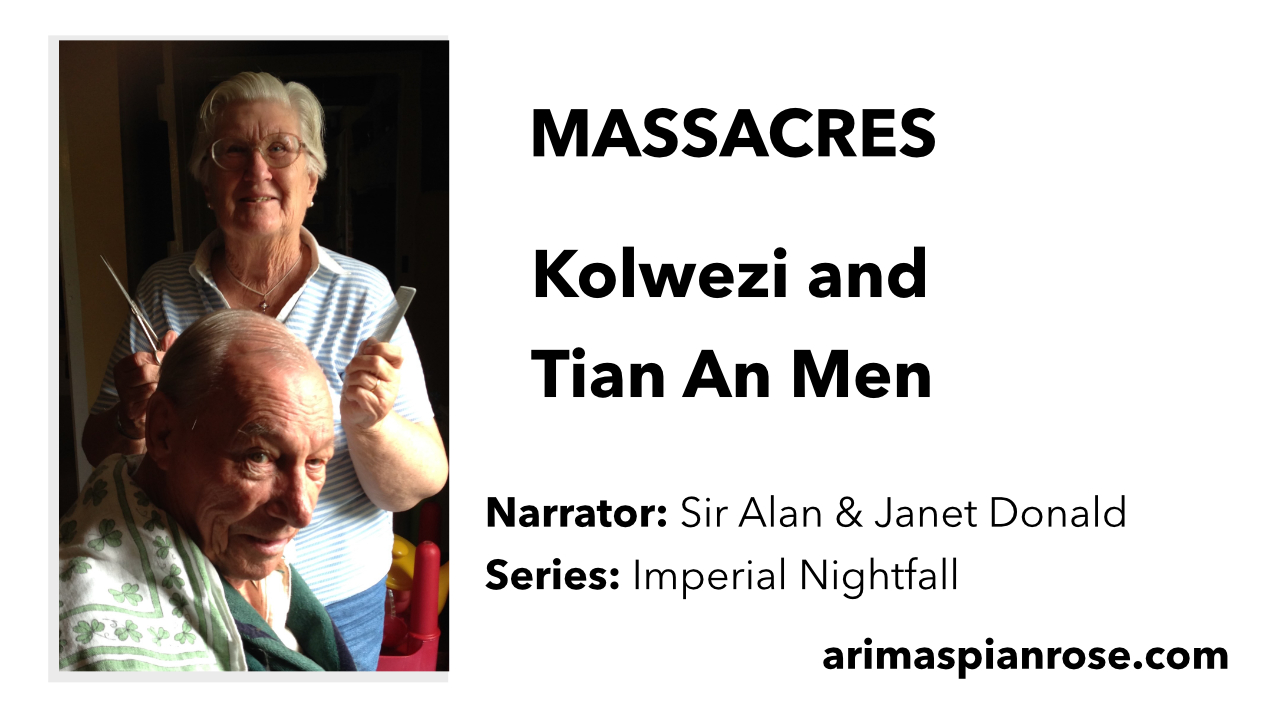
Sir Alan Donald served as the British Ambassador to China and earlier to the Congo DRC, then known as Zaire. During that time he witnessed two momentous events – Massacres at Kolwezi in the Congo and in Tiananmen Square in Bejing. In this video he recounts how experiences
Background Context :
The Tiananmen Square Massacre, also known as the June Fourth Incident, occurred on June 4, 1989, in Beijing. It was the culmination of weeks of student-led pro-democracy protests sparked by the death of Hu Yaobang, a reform-minded Communist Party leader.
Key Events
Protests (April–May 1989): Demonstrations began in April, with students demanding political and economic reforms, including freedom of the press and an end to corruption. By mid-May, numbers swelled to an estimated one million people in Beijing.
Martial Law (May 20, 1989): Following internal division within the Communist Party, hardliners led by Premier Li Peng and supported by Deng Xiaoping declared martial law to suppress the “counter-revolutionary riot”.
The Crackdown (June 3–4, 1989): On the night of June 3 and the early morning of June 4, the People’s Liberation Army (PLA) advanced toward Tiananmen Square using tanks and live ammunition. Much of the violence occurred on the roads leading to the square, such as Chang’an Avenue.
The Kolwezi massacre refers to the mass killing of civilians in the mining town of Kolwezi, Zaire (now Democratic Republic of the Congo), in May 1978. The event occurred during the Shaba II conflict when rebels from the Congolese National Liberation Front (FLNC) invaded the town.
Key Facts of the Massacre
Perpetrators: The killings were carried out by FLNC rebels (often called Katangan rebels) who invaded from bases in Angola.
Casualties:
Estimates indicate that between 120 and 170 European expatriates (mostly Belgians and French working in the mines) were killed.
Approximately 700 African civilians were also killed during the occupation.
Atrocities: Survivors reported summary executions, including the murder of 34 men, women, and children in a single house. Victims were often targeted based on race or their connection to the mining industry.